For years, a website without a photo budget went to a stock library. You searched “business meeting”, picked the least awkward picture and hoped your competitor hadn’t picked the same one. The photos were well made, but the colours, the light and the mood came from someone else’s shoot, and anyone could buy the same picture. AI images changed that part of my job.
Now I can describe the scene I want and set it up for one brand. AI images can look as professional as a stock photo, and nobody else’s site has that exact one.
AI images, stock photos or a real shoot?
Stock does the job for a quick one-off. A real shoot wins whenever a picture has to prove something, like your staff, your shop or your products. For everything in between, such as website pages and illustrations, I’d have the picture made for the brand, with a designer checking every one.
| Stock photo | AI image made for your brand | Real photos | |
|---|---|---|---|
| Who else can use it | Anyone who buys it | Nobody has that exact picture | Only you |
| Colours and mood | From someone else’s shoot | Set from your brand guide | Your real place and light |
| Same look on every page | Hard, photos come from different photographers | Yes, one light and setting for the set | Yes, from one shoot |
| Can it show your real staff, shop or products | No | No, and it misleads if used that way | Yes |
| Watch out for | Your competitor picking the same one | Odd hands, garbled text, stray logos, the tool’s terms | It needs a shoot (we arrange it with Adorn Media Studio) |
| Best for | A quick one-off | Everything in between | Anything a customer treats as proof |
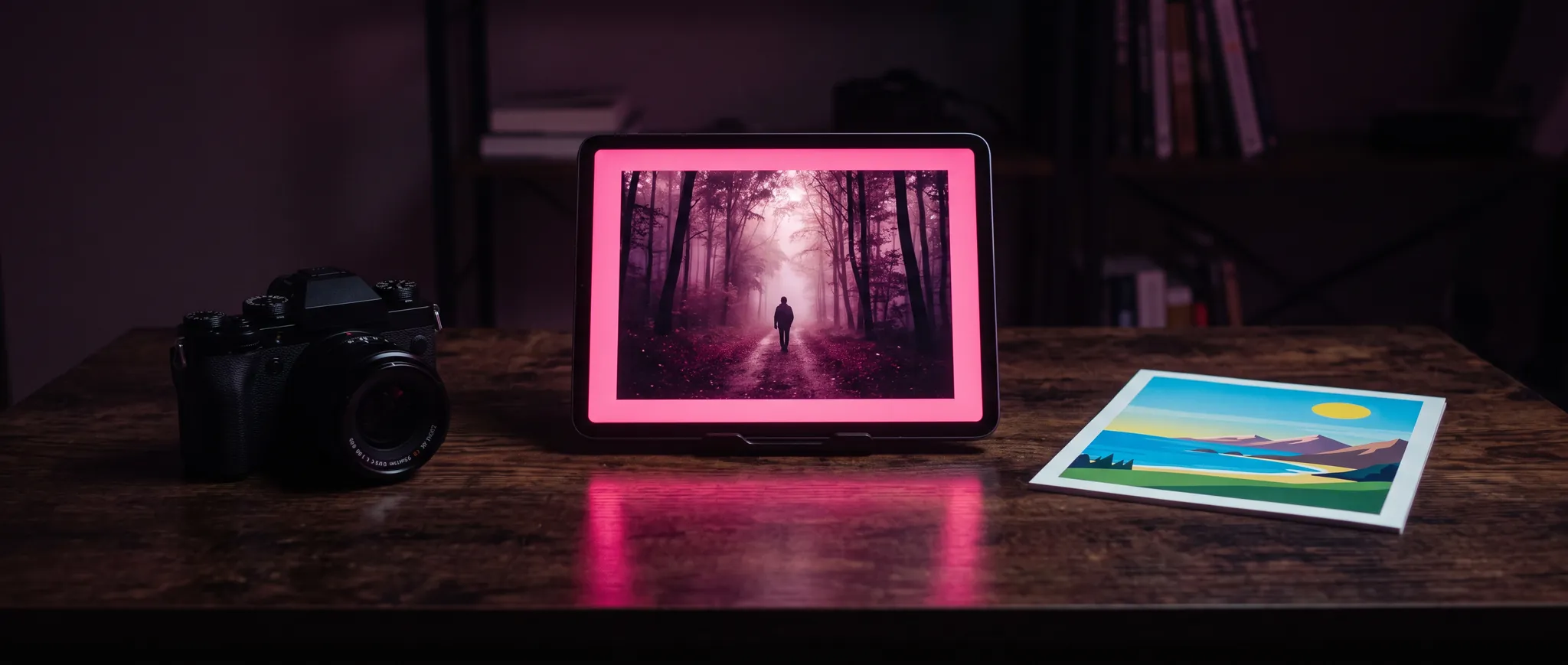
What changes when a picture starts from the brand
For example, take Strogonofy’s own colours, deep plum and hot pink. A stock photo of an office will never sit naturally under a plum heading. A picture generated for the brand can have that plum in its shadows and a touch of pink in the light, so it looks like part of the page.
It also helps across a whole website. Stock photos come from different photographers, so the light and colour jump from page to page. When I make a set for one client, I can keep the same light, setting and mood on every page.
How I make AI images fit a brand
Start with the brand guide
The colours, the tone and the kind of place this brand would be found in.
Generate a batch
Throw most of it away and take the best ones further.
Check every image
For the usual mistakes: odd hands, garbled small text and logos that shouldn’t be there.
Set it up
For where it’s going: a web page, a banner or a guide.
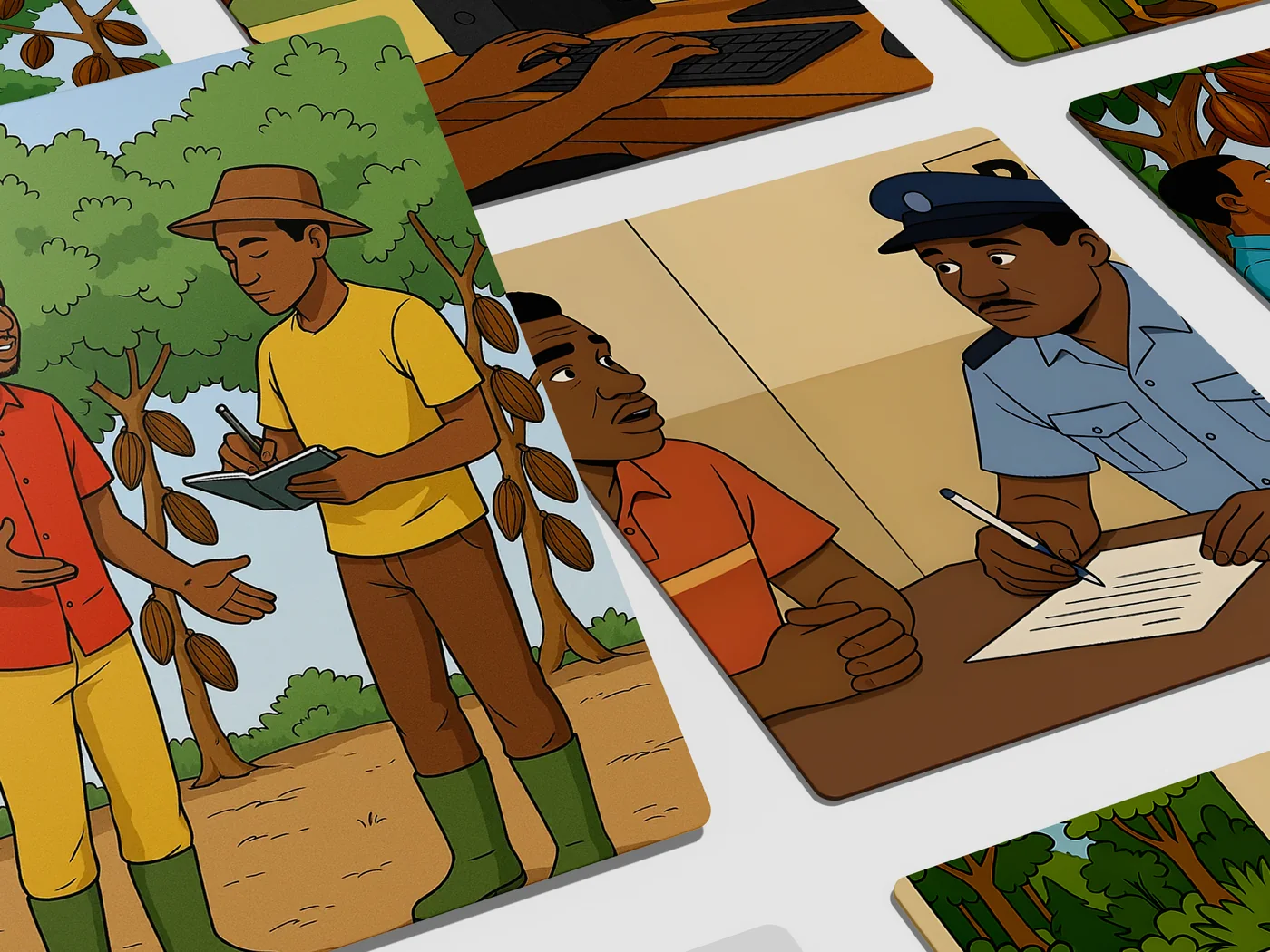
It works for illustrations too. On certain manuals and guides we may use AI for illustrations, especially where stock imagery can’t meet the requirements. AI gives us a first version of each one, and we then edit and correct it until its theme and context fit that page of the guide. Each image still takes dozens of versions, but starting every one from scratch would take longer, and it leaves us more time for the guides themselves. It also brings the cost down for clients, especially on projects with hundreds of images. There’s more on how we use AI.
It’s the same technology that makes every ChatGPT flyer look alike. The difference is a designer steering it with your brand in front of them. Years of design and media work tell you which picture to keep, and a company that leaves it all to the tool ends up with cookie-cutter pictures like everyone else’s.

Where AI images don’t belong
Your staff, your shop, your products and your finished work need real photos. If a customer will treat a picture as proof, an AI version misleads them, and they’ll notice when they walk in.

I keep AI away from final logos. Buildings need something stricter again, because an AI image can change the windows or the proportions without anyone asking it to. The 3D renders I’ve done for Brut Architects in Pretoria and Pais Ministro Architecture in Portugal were properly modelled, down to the finishes and custom cabinetry on Casa AL. None of our architecture work uses AI.


Can you use AI images for your business?
Usually, but check two things first. Read the terms of the tool that made the picture, because they differ from one tool to the next. And don’t use an AI picture anywhere it could pass as proof, such as your staff, your shop or a product you sell. Google says it rewards helpful content however it’s produced, so an AI picture won’t count against your site in search just for being AI. I’m a designer, not a lawyer, so for anything that matters, like a logo or a product photo, ask someone who works with intellectual property. Registering trade marks and copyright stays with you as the client, and I’ll always tell you which pictures on your project were made with AI.
Still, stock does the job for a quick one-off, and a real shoot beats both when you have something real to show. For everything in between, I’d have the picture made for the brand.